


How Much Annual Leave Are Employees Allowed To Accumulate?
Annual leave and its accrual thereof has always been subject to misunderstanding and controversy. Employers in the past have allowed staff to accrue an indefinite amount of leave. In some instances, employers allowed employees to sell leave days as same may have benefited the business. The differing views and the application of the provisions in the Basic Conditions of Employment Act 75 of 1997 has lead us to answer the question mentioned above: how much annual leave is an employee allowed to...
What Is The Obligation Of The Supplier Who Delivered Incorrect Goods?
The supplier must, within ten business days after the delivery of any incorrect goods to the consumer, inform the consumer that goods were delivered in error. Those goods become unsolicited only if the supplier cannot recover the goods within 20 business days after informing the consumer. A consumer has no obligation to pay a supplier for unsolicited goods or services or a deliverer for the cost of delivery of any unsolicited goods. To find out how SEESA can help your business visit our...

Security Compromises As Required By Section 22 Of POPIA
If your company has experienced a security compromise, the information officer or deputy information officer will be required to complete a pdf fillable form from the Regulator’s website. Failure to do so could mean the notification is non-compliant. When you have experienced a security compromise, you must notify the Regulator as soon as possible using this notification form. The Regulator will then send an acknowledgement of the notification with a reference number. The responsible party is...
DYK – Informal Training Is Capped For Purposes Of BEE Calculations?
Informal training comprises both your unaccredited external training as well as your internal training. This type of training usually falls under Category F & G on the Skills Development Matrix. External informal programmes are structured and can take the form of short courses, workshops or seminars. Upon completion, the trainee receives a completion certificate or attendance register from the training provider. Internal training is generally done in the workplace and results in an...
Episode 135: Unsure How To Approach The BEP Sub-sector Within The Construction Codes?
SEESA BEE Legal Advisors Saigal Inderpal and Seshni Chetty discuss the type of entities that are classified as BEP and the general requirements thereof. They also discuss the differences between Contractors and BEPs. Click on the play button below to listen to our podcast! Should you require more information regarding this topic, contact your nearest SEESA office. Alternatively, please leave your contact details on SEESA’s website for an advisor to contact you....
SED Contributions And The Construction Sector Codes
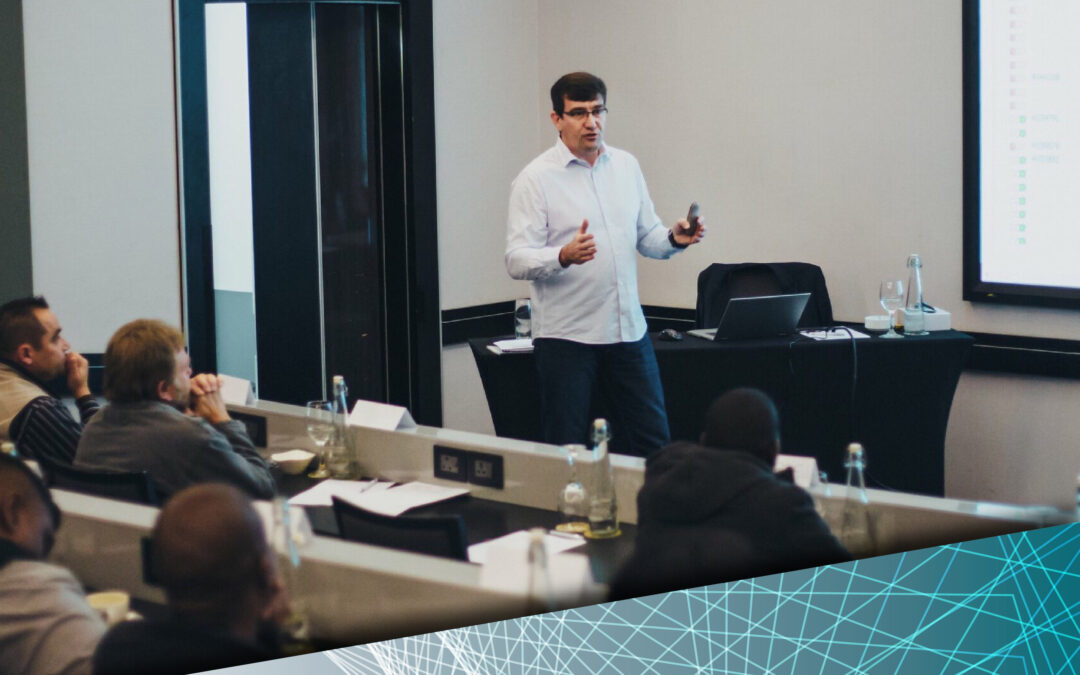
The entities that form part of the Construction Sector Codes must spend a percentage of their Net Profit After Tax on Socio-economic Development initiatives in their applicable financial period. Regarding a QSE Company (revenue between R10 – R50 million for contractors and R6 – R25 million for BEP’s), the target is 1% of Net Profit After Tax. A further requirement is that 50% of the calculated target must be spent on Communities with Limited Services. A Generic Company (revenue above R50...

IMPORTANT NOTICE – EXTENSION OF THE ZIMBABWE EXEMPTION PERMITS (AND THERE ARE OPTIONS)
Following the announcement by the Minister of Home Affairs on the extension of the Zimbabwe Exemption Permits (ZEP), it is of utmost importance that all South African business owners with ZEP holders in their employ, take note that the grace period to transfer these ZEP holders over to a suitable mainstream visa, as regulated by the Immigration Act 13 of 2002, will end on the 30th June 2023. Should employers wish to assist employees who are ZEP holders, there are a wide range of mainstream...

Can A Company Only Proceed With A B-BBEE Verification Based On The Company’s Latest Financial Statements?
Yes, a company can only proceed with a B-BBEE verification based on the company's latest financial statements. The South African National Accreditation System (SANAS) is responsible for the accreditation of BEE verification agencies. SANAS has specifically addressed the measurement period that entities can use for their BEE verification. In the past, some verification agencies were willing to accept financial statements for any 12-month period, but SANAS has now stated clearly that the...

What Are The Targets For Supplier, Enterprise And Socio-Economic Development In Terms Of The ICT Sector?
The ICT (Information Communication and Technology) Sector is one of the fast-growing sectors in the B-BBEE landscape. Entities that fall within the ICT scope of application are pressured to participate in the B-BBEE Process. In terms of the Sector Code, an ICT entity will be an entity that operates within the following definition: The Information and Communications Technologies (ICT) Sector” shall without, in any way, limiting the ordinary meaning of the terms, mean the sector in which...
DYK – Small Businesses Can Make Family Responsibility Leave Part Of Annual Leave?
Few employers are aware of a Ministerial Determination made in 1999, which relaxes some of the Basic Conditions of Employment Act provisions for small businesses. One of these concessions is regarding Family Responsibility Leave. Usually, an employee who works over four months for an employer and works for more than four days a week is entitled to three (3) days paid leave per year for the illness of a child or in the event of the death of the employee’s spouse, life partner, parent,...