

Estimated reading time: 5 minutes
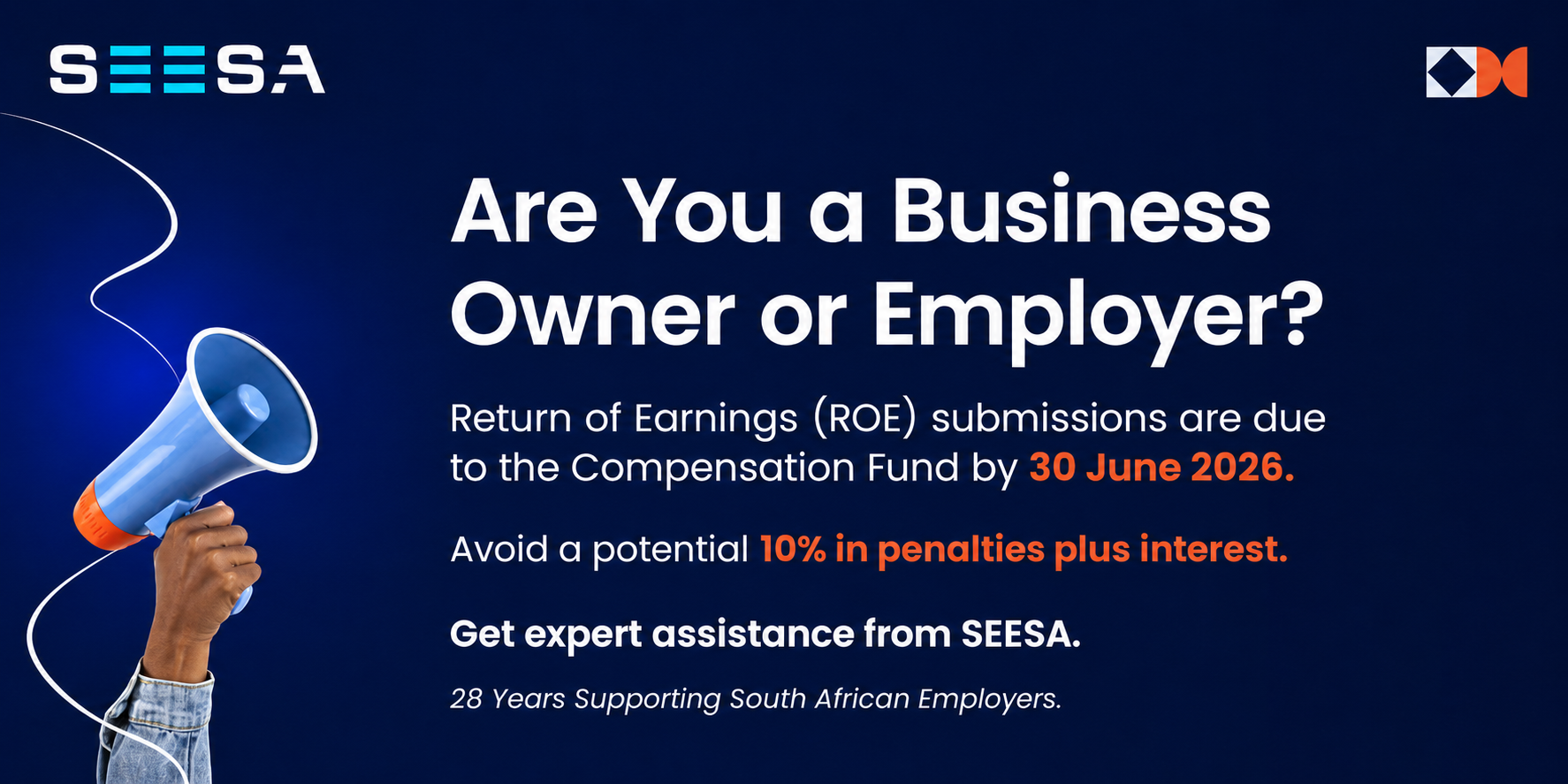
The COID Return of Earnings deadline is approaching. South African employers must submit their annual Return of Earnings to the Compensation Fund by 30 June 2026.
Employers who submit late will incur a penalty of 10% on their assessment amount. Interest may also be charged on overdue accounts. In addition, an outstanding submission or payment of an assessment may prevent a business from obtaining a valid Letter of Good Standing.
SEESA assists employers with Compensation Fund registration, annual Return of Earnings submissions and obtaining Letters of Good Standing.
What is the 2026 COID Return of Earnings deadline?
The official Return of Earnings submissions period for the 2025 assessment year runs from 1 April 2026 to 30 June 2026.
According to the 2026 Government Gazette notice issued by the Acting Compensation Commissioner, employers who submit their Return of Earnings after the prescribed deadline will incur a 10% late-submission penalty. The notice also confirms that interest will be charged on overdue accounts.
Employers should not wait until the final days of the submission period. Early submission provides time to identify payroll discrepancies, correct employer details and address unexpected assessment amounts.
What is a Return of Earnings declaration?
A Return of Earnings declaration, commonly referred to as an ROE, is an annual declaration submitted to the Compensation Fund.
It records:
- The actual remuneration paid to employees during the completed assessment period; and
- The estimated remuneration the employer expects to pay during the next assessment period.
The Compensation Fund uses this information, together with the employer’s classification and risk code, to calculate the annual assessment payable by the business.
Employers must therefore ensure that the declared payroll information is complete and accurate. Incorrect information can result in an inaccurate assessment and may create additional administrative delays.
Employers can access the official Compensation Fund ROE Online service through the Department of Employment and Labour.
Which employers must comply with COIDA?
A business that employs one or more employees must register with the Compensation Fund and comply with the Compensation for Occupational Injuries and Diseases Act. Domestic employers are included under COIDA and must also register with the Compensation Fund, submit returns, pay assessments and be in possession of valid Letters of Good Standing.
To remain compliant, an employer must:
- Register with the Compensation Fund 7 days after employing its first employee;
- Submit annual Return of Earnings;
- Pay the annual assessment issued by the Compensation Fund; and
- Obtain a valid Letter of Good Standing.
These obligations apply even if the business has never experienced an injury on duty.
Employers must also notify the Compensation Fund when important business particulars change. These changes may include the nature of the business, its physical address, contact details or operational status.
What happens when an employer misses the ROE submission deadline?
An employer who misses the COID Return of Earnings deadline may incur a penalty equal to 10% of the applicable assessment amount.
Late submission can also lead to:
- Interest on overdue accounts;
- Delays in receiving an assessment;
- Difficulty obtaining a Letter of Good Standing;
- Tender or contractor compliance problems; and
- Administrative complications when managing workplace injury claims.
The financial effect can be substantial, especially for employers with large payrolls or higher-risk classification codes.
Employers should also avoid submitting an inaccurate provisional declaration simply to meet the deadline. The information must reflect the business’s payroll records and employee remuneration correctly.
What if an employer cannot afford the assessment?
An employer experiencing financial difficulty should not ignore the assessment or allow the account to remain unpaid without taking action.
The employer may apply to the Compensation Fund for a payment arrangement or instalment plan. An approved arrangement can help the business manage the assessment over an agreed period.
It may also help the employer avoid further penalties and interest while working towards obtaining or retaining a Letter of Good Standing. However, approval is not automatic. The employer must apply and provide any supporting documentation requested by the Compensation Fund.
SEESA assists clients with the instalment-plan application process where the assessment fees cannot be settled in a single payment.
Why is a Letter of Good Standing important?
A Letter of Good Standing confirms that an employer has met the applicable Compensation Fund compliance requirements.
Clients, tender authorities and principal contractors may require this document before appointing a business or allowing it to begin work.
A valid Letter of Good Standing may also be relevant when an employee suffers an occupational injury or disease. The employer may need to provide it to the treating medical practitioner in order for treatment and claim administration to proceed.
Read more about why a Letter of Good Standing is important and how to obtain one.
Common COID Return of Earnings mistakes
Employers can reduce delays by checking their information before submitting the annual return.
Common mistakes include:
- Declaring incorrect employee remuneration;
- Excluding employees who should form part of the declaration;
- Using outdated employer or contact details;
- Submitting under an incorrect business classification;
- Waiting until the final day to submit;
- Ignoring the assessment fee after submission; and
- Assuming that a payment automatically resolves all outstanding compliance matters.
Employers should reconcile their payroll information before completing the return. They should also retain supporting records in case the Compensation Fund requests confirmation or flag the employer for an audit.
Nidene de Jager | UIF & COID | Manager | SEESA
Prepare your business. Request a labour law risk assessment today. SEESA’s labour law consultants are ready to assist.