


Understanding the Promotion of Access to Information Act (PAIA)
The purpose of the Promotional of Access to Information Act 2 of 2000 (PAIA) is to give effect to the Constitutional right of access to information held by both private and public bodies. It aims to promote a society in which South African’s can easily access or obtain information to enable them to exercise and protect all their rights. A formal request for information in terms of PAIA is a powerful tool one can use to gain access to the information or records of a private or public body....

Did you know? Your domestic workers are now covered under the COID Act.
This is according to the Constitutional Court order dated 19 November 2020, wherein it was ruled that domestic employees will now be entitled to compensation in the event they are injured or contract diseases while on duty. The compensation payable to domestic workers for occupational injuries and diseases are the same benefits that are payable to all other injured employees. To find out how SEESA can help your business visit our website for more: https://bit.ly/3xnZ5OW
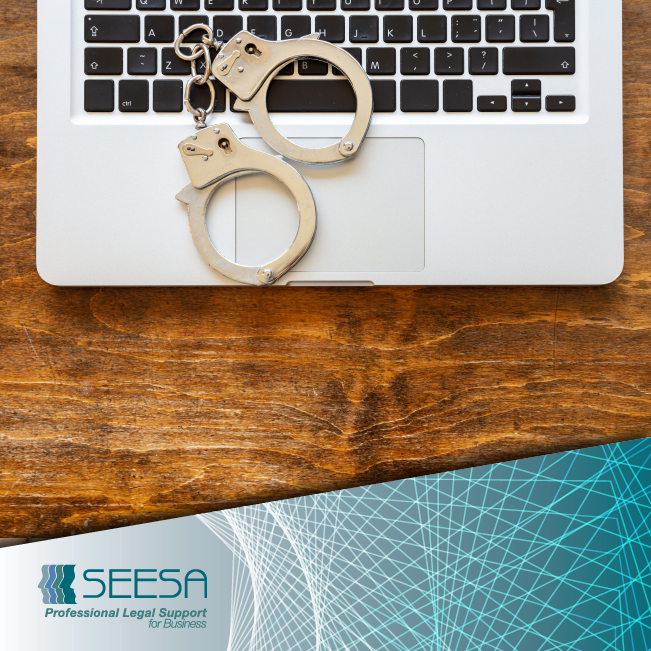
What Happens If Your Business Doesn’t Comply With The POPI ACT?
The new Protection of Personal Information Act (POPI) is in full swing. What are the consequences if you do not comply with this Act? These are some frequently asked questions. The penalties and fines as stipulated in Section 107 of the POPI Act state that if you do not adhere to, or if you are convicted of an offence in terms of this act, you will be liable, in the case of a contravention of the following Sections: Section 100: Obstruction of Regulator’s;Section 103 (1): Failure to comply...

Episode 73: Introduction To PIVOTAL Programmes And The Benefits For Your Business
SEESA Skills development Facilitators, Juanell Mare and Sunelle du Preez discuss the different Professional, Vocational, Technical and Academic Learning Programmes available. With the increasing requirement to implement PIVOTAL programmes, they advise on identifying a suitable programme for your business and provide insight on the benefits of implementing PIVOTAL programmes. Click play to listen to our podcast! Interested in having your own SEESA Skills Development Facilitator to assist your...

The Difference Between Negligence And Gross Negligence
It is essential to distinguish between negligence and gross negligence. The reason being that negligence will not warrant dismissal for a first offence, whereas gross negligence could warrant dismissal for a first offence. Negligence is seen as the failure to fulfil the standard of care that ought to be exercised by a reasonable person in a particular situation. In labour law, the reasonable person test is used to establish negligence. The test entails determining whether a reasonable...
Did you know? A company can apply for an additional amount in a Discretionary Grant on top of the 20% Mandatory Grant.
Companies that annually submit their Mandatory Grant claim (Actual Training Report / Workplace Skills Plan) to their relevant SETA can also apply for the Discretionary Grant. Companies are able to apply for the grant on Learnerships, Apprenticeships, Bursaries, Skills programs etc. – Training programs that lead to a full qualification or form part of a qualification – these are often called PIVOTAL programs. The relevant SETA will open up a “window application period” each year to inform...
Did you know? BEE verifications are subject to the SANAS regulatory body, and that all verifications must now be done on your company’s latest financial year-end?
What does this mean for your business? The South African National Accreditation System (SANAS) is the body responsible for the accreditation of BEE verification agencies. SANAS recently specifically addressed the measurement period that entities can use for their BEE verification. In the past, some verification agencies were willing to accept financial statements for any 12-month period, but SANAS has now stated clearly that the measured period can only ever be the financial year-end for the...

A Refusal To Work Due To Late Payment Of Salaries
COVID-19 has wreaked havoc in the world’s economy, and South Africa was not spared the wrath of the COVID-19 storms, poor economic growth coupled with fears of a third wave has sent shivers down the spine of many businesses. The reality of another lockdown is a frightening one, more so as dwindling turnovers threaten the livelihoods of many South Africans. So what happens when a business is struggling financially, so much so that they cannot honour paying salaries on time? This is the question...
Episode 72: How Can Data Mapping Assist A Business Owner With POPI Compliance?
SEESA Consumer Protection And POPI legal advisors, Marike Brand and Stephanie Christensen discuss how an information officer could use a data mapping tool as an internal measure to ensure that adequate standards exist to comply with the conditions of lawful processing. They briefly summarise and explain what information should be captured. Click play to listen to our podcast! Should you require further assistance or consumer-related advice, please contact your nearest SEESA office for...

Increase Your B-BBEE Score Through A Joint Venture
A Joint Venture (JV) is a business agreement between two or more entities whereby they agree to join their resources for the purpose to achieve a specific business goal. A JV is its own entity, separate and apart from the participants to the agreement. It will require its own Broad-Based Black Economic Empowerment (B-BBEE) certificate when responding to tenders and entering into contracts that require a B-BBEE certificate. This means you will have to obtain a new B-BBEE certificate for the...