

Episode 121: Amended BEE Sector Codes And Reporting To The Financial Sector Transformation Council (FSTC)
SEESA BEE & Labour Legal Advisors, Edmund Drake and Chanté du Plessis discuss the amended BEE Finance Sector Codes and when it is required to report to the Financial Sector Transformation Council (FSTC). They also discuss the scope of application, the different thresholds and the elements within the Amended Finance Sector Codes. Click on the play button below to listen to our podcast! Contact your SEESA BEE Advisor to assist your business with any BEE related queries you might have....

Get With The Customer Loyalty Programme
Section 35 of the Consumer Protection Act has changed the landscape for suppliers who run customer loyalty programmes as part of their marketing strategy. Loyalty credit or rewards under these programmes are deemed a legal medium of exchange when redeemed for goods or services offered in the loyalty programme. A supplier or service provider who accepts loyalty rewards or credits as an exchange for any goods or services may restrict the availability of the goods or services during a particular...
When Is A Business Allowed To Process A Data Subject’s Special Personal Information?
Section 26 of the Protection of Personal Information Act 4 of 2013 (POPIA) states that special personal information relates to a data subject's criminal behaviour, trade union membership, health or sex life, religious or philosophical beliefs, political persuasion or biometric information. Section 26 further states that a responsible party may not process a data subject's special personal information unless one or more of the following exceptions are present as per Section 27 of POPIA: If the...

Imperfection Of A Vehicle Could Lead To The Cancellation Of A Purchase Agreement.
Most dealerships would have the same problem regarding defects on motor vehicles that could lead to the cancellation of a purchase agreement. The question would be whether these defects could be justified as imperfection, causing the defects to render the vehicle less useable and justifying the cancellation of the purchase agreement. The CPA defines “defect” in section 53(1) as follows: any material imperfection in the manufacture of the goods or components, or performance of the services,...
DYK – It Is A Requirement To Submit A B-BBEE Certificate When Applying For A Liquor Licence?
The Department of Trade and Industry (DTI) requires an entity to be registered with the National Liquor Authority if they wish to trade as a manufacturer or distributor of liquor. The (DTI) requires that several documentation and requirements be submitted to proceed with an application to obtain a manufacturer or distribution license. An essential requirement to obtain the license mentioned above, is to submit a B-BBEE certificate. A B-BBEE certificate will also be required upon the annual...

Episode 120: Collective Agreements Concluded With Majority Trade Unions And The Effect On Minority Unions And Non-Union Members
SEESA Labour Legal Advisors, Charl Vollgraaff and Sandrisha Govender discuss aspects of Labour Law in South Africa as it relates to collective bargaining and collective agreements. They focus on collective agreements concluded with majority trade unions and the effect on minority unions and non-union members. Click on the play button below to listen to our podcast! Contact your nearest SEESA office to assist your business with labour related queries. Alternatively, leave your contact details...
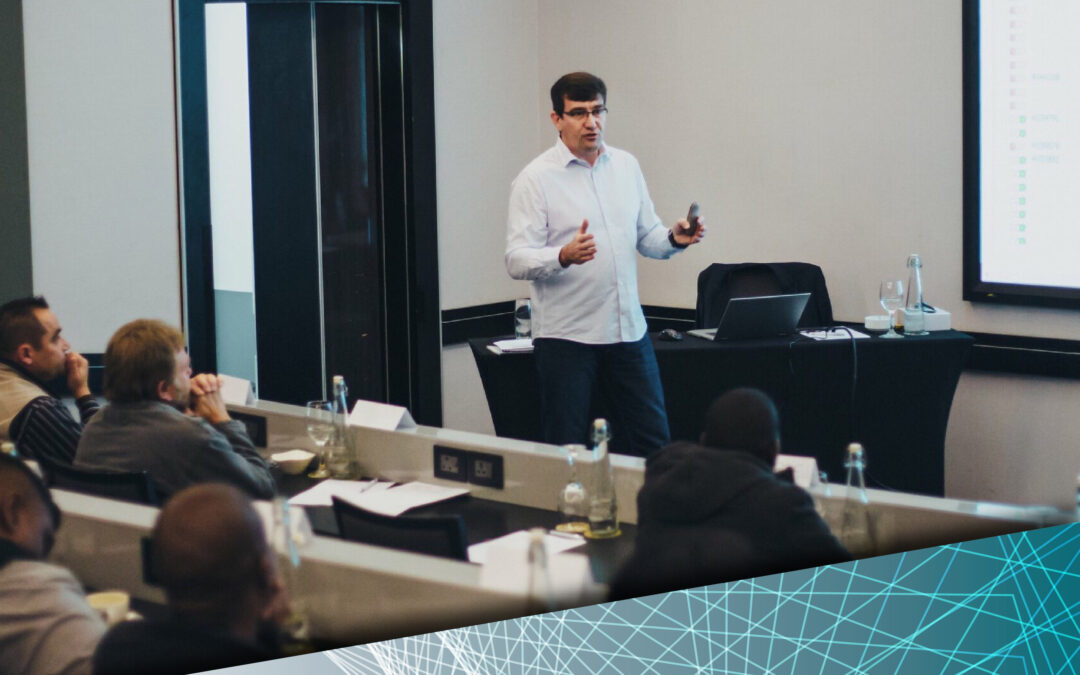
Findings Of The B-BBEE Commission Annual Conference
The annual conference of the B-BBEE Commission was held on the 1st of April 2022. The conference’s purpose was to reflect on the 18 years in which the B-BBEE codes have been applied and the period after which the Commission was established. The conference’s main aim was to reflect on the challenges faced, progress made and to identify plans to improve economic transformation moving forward. The impact of the priority elements on the B-BBEE codes was also an important aspect. It was reported...

Does The Size Of My Company Matter For B-BBEE Purposes?
There is a common misconception or misunderstanding that companies have regarding B-BBEE and the level that they will receive. Most companies believe that should they be 100% or 51% black-owned, they would receive an automatic level 1 or 2 based solely on their ownership and, that no other element in the B-BBEE scorecard must be complied with. However, when dealing with the subject of BEE, the starting point for any company will always be to consider which sector code it operates within and...
DYK – An employee can be dismissed for abusing sick leave
Although this seems to be an apparent situation, at first glance, the matter had to be escalated to the Labour appeal court to be confirmed. In the case of Woolworths (Pty) Ltd v CCMA and others PA 12/2020 LAC, an employee claimed to be ill and attended a Rugby match. The CCMA found the dismissal was unfair both procedurally and substantively, as he had not hidden the fact that he attended the match and he was, therefore, not dishonest. The Labour Court found the dismissal procedurally fair...

Episode 119: Unsure How To Fully Comply With The EEA12 Of The Employment Equity Act?
SEESA Skills Development Facilitators Sherice Stone and Chante Lottering review and explain what a company must adhere to in terms of Employment Equity compliance to the EEA12 requirements. They also explain Section 19 of the Employment Equity Act, with specific reference to under and over-representation and barriers identified in the company. Click on the play button below to listen to our podcast! Interested in having your own SEESA Skills Development Facilitator to assist your business?...